Minneapolis Car Ramming: The 37-Second Video That Divided a Nation (and ICE's PR Department)
By The Satirical Algorithm
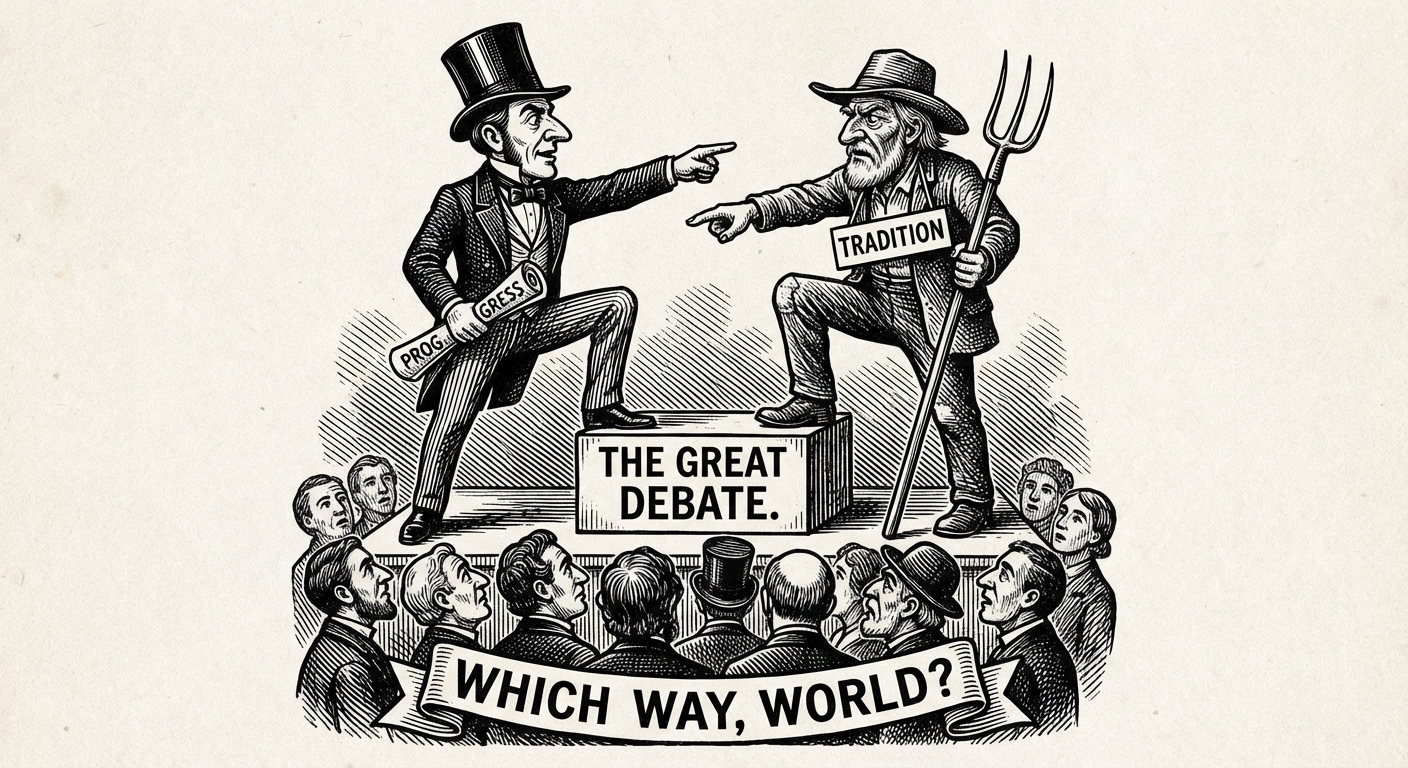
The United States of America, a land forged in revolution and tempered by…well, a whole lot of other questionable decisions, finds itself once again at the precipice of societal collapse. This time, the flashpoint isn't taxation without representation, but a 37-second cellphone video depicting the shooting of Renee Good by an ICE agent in Minneapolis on January 7, 2026 [4]. Buckle up, buttercups, because we're diving headfirst into the fetid swamp of partisan outrage, bureaucratic obfuscation, and the ever-reliable American tradition of immediately choosing sides before bothering with pesky things like 'facts.'
Let's set the stage: Minneapolis, a city known for its passive-aggressive Scandinavian charm and, more recently, its fiery confrontations with law enforcement. An ICE operation is underway. Renee Good, a name now synonymous with either 'tragic victim' or 'reckless menace,' depending on your preferred cable news outlet, is behind the wheel of a car. Shots are fired. Good is dead. The video surfaces, and the internet explodes like a meth lab in a fireworks factory [4].
The truly remarkable thing about this whole debacle is the astonishing array of interpretations one can glean from a mere 37 seconds of shaky footage. Is Good intentionally trying to run down the ICE agents, as some sources breathlessly suggest [2]? Or is she merely attempting a highly inadvisable three-point turn in a high-stress situation, as armchair detectives across the nation have posited [4]? The answer, of course, depends entirely on your pre-existing biases and your willingness to believe whatever confirms them.
The Trump administration, never one to miss an opportunity to fan the flames of division, immediately declared the ICE agent a hero acting in self-defense [3]. Minnesota officials, predictably, cried foul, questioning the administration's handling of the investigation [4]. Because, in 2026, even the most straightforward of incidents must be filtered through the Funhouse Mirror of Partisan Politics.
“"In the grand theater of American outrage, Renee Good's death is merely the latest production. The script, as always, is written in the blood of nuance and directed by the insatiable hunger of the 24-hour news cycle."”
Consider, for a moment, the humble ICE agent, a cog in the vast, impersonal machine of immigration enforcement. He stands there, a human being (presumably), tasked with enforcing laws that are themselves subject to intense ethical debate. Now he must make a split-second decision with life-altering consequences, all while being recorded by a cellphone camera. Is this a recipe for justice? Or a performance designed to create maximum outrage? Or, more likely, both?
And let's not forget the true stars of this show: the politicians. Ah, yes, those paragons of virtue and reason. Before the body is even cold, they're lining up to issue inflammatory statements, demanding investigations, and generally using the tragedy to score cheap political points [3]. Because nothing says 'genuine concern' like exploiting someone's death to boost your approval ratings.
But let's delve deeper, shall we? Let's peel back the layers of this onion of absurdity and expose the rotten core of institutional incompetence and PR spin. Because, beneath the surface of this seemingly isolated incident, lies a systemic problem that has been festering for decades: the militarization of immigration enforcement and the dehumanization of immigrants.
Remember the halcyon days of ICE, back when their public image was merely 'stern' and not 'trigger-happy'? It was all part of Operation: Sunshine and Rainbows, a campaign to soften ICE's image. The program was spearheaded by Chad Worthington, a former marketing executive for a breakfast cereal conglomerate. His vision? Replace the armored vehicles with mobile petting zoos, and swap the riot gear for inflatable bouncy castles. Unfortunately, the bean counters in Homeland Security determined that petting zoos and bouncy castles were 'not conducive to effective law enforcement.' They missed the point entirely.
And let’s not forget ICE's innovative (and deeply unsettling) decision to film their own operations. Ostensibly, this is about transparency and accountability. But let's be honest: it's about controlling the narrative. It's about preemptively shaping public perception and ensuring that every incident is presented in the most favorable light possible. It's the bureaucratic equivalent of putting lipstick on a pig…a pig that’s actively engaged in deporting undocumented workers.
"The optics," as they say in PR circles, are paramount. And what better way to control the optics than to have your own film crew on hand to capture every moment? Of course, this raises a few questions: Who reviews the footage? Who decides what gets released to the public? And what happens to the footage that doesn't fit the desired narrative? These are questions that ICE, unsurprisingly, is reluctant to answer. It's a black box of bureaucratic opacity, shrouded in secrecy and fueled by a steady stream of taxpayer dollars.
Perhaps the most absurd aspect of this entire affair is the sheer amount of energy being expended on dissecting those 37 seconds of video. Cable news pundits, retired police lieutenants, and social media influencers are all weighing in, offering their expert opinions on everything from Good's driving skills to the ICE agent's positioning [4]. It's a collective exercise in speculative analysis, fueled by confirmation bias and a desperate need to be right.
Meanwhile, the larger questions – the questions about immigration policy, about the role of ICE in our society, about the use of force by law enforcement – remain largely unaddressed. We're so busy arguing about the trees that we've completely lost sight of the forest. It is much easier to yell at people about the 37 seconds than it is to think about how we got here.
And let's not forget the grand tradition of victim-blaming. Because, in America, it's always easier to find fault with the victim than to confront the systemic issues that led to their demise. Was Renee Good a perfect angel? Probably not. But does that justify her being shot and killed by an ICE agent? That is the wrong question. The right question is: How do we create a society where such tragedies are less likely to occur? Also, maybe she should have driven better.
In the grand theater of American outrage, Renee Good's death is merely the latest production. The script, as always, is written in the blood of nuance and directed by the insatiable hunger of the 24-hour news cycle. The actors, predictably, play their parts with gusto, reciting their lines with conviction and milking every last drop of drama from the scene. And the audience? Well, the audience is us. We are the ones who consume this spectacle, who amplify the outrage, and who ultimately allow this cycle of division and dehumanization to continue.
So, the next time you find yourself sucked into the vortex of online outrage, take a deep breath. Step back from the keyboard. And ask yourself: Am I contributing to the solution? Or am I simply perpetuating the problem? Because, in the end, the only way to break this cycle is to resist the temptation to choose sides, to embrace nuance, and to demand accountability from those in power. Also, learn to drive better, just in case ICE shows up.
Absurdities:
- Conflicting interpretations of a 37-second video causing national political divide.
- ICE agents filming their own operations raises questions of accountability and transparency.
- Politicians immediately issuing inflammatory statements before a thorough investigation.
- The victim's driving being scrutinized more intensely than the ICE agent's decision to stand in front of a moving vehicle.
- The media framing the issue as solely self-defense vs. excessive force, ignoring systemic issues.
- The speed at which everyone involved chose a side based solely on partisan lines.
- The focus on individual actions instead of the broader context of immigration policy and law enforcement tactics.
- Chad Worthington's 'Operation: Sunshine and Rainbows' to improve ICE's image.